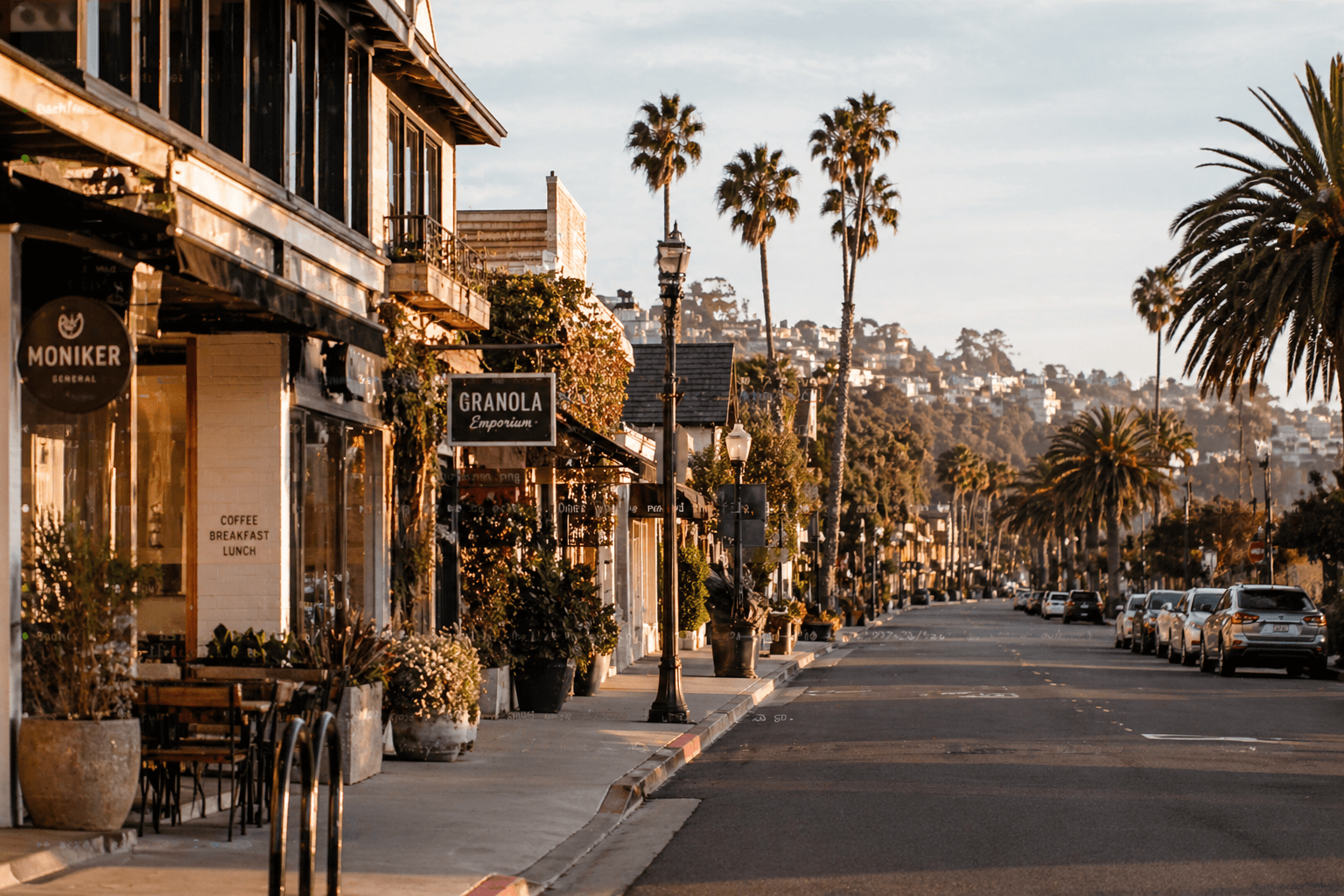
San Diego has a reputation as a car city, and for most of the metro that reputation is fair. But pockets of it have quietly become some of the most walkable neighborhoods in California — places where the grocery store, the coffee shop, the bar you'd actually want to spend a Tuesday at, and a park worth sitting in are all within a fifteen-minute stroll. The list below isn't ranked. It's organized by what kind of life you're trying to build there.
Little Italy is the obvious one, and it earns the spot. The neighborhood has reinvented itself over the last decade into something denser and more deliberate than the rest of downtown. India Street runs as a kind of main artery, with the Saturday Mercato pulling in fifty thousand people most weekends. You can walk to Mona Lisa for groceries, Pappalecco for an espresso, the waterfront for a run, and Born and Raised for a steak that's worth the noise. Piazza della Famiglia, the central plaza added in 2018, gave the neighborhood the kind of public gathering space most American downtowns are missing. Rent is high. The walking is exceptional.
North Park is what people mean when they call San Diego a creative city. The 30th Street corridor runs from Upas down past University, and the density of independent businesses along it is genuinely unusual — Communal Coffee, Holsem, Polite Provisions, Carnitas' Snack Shack, the Observatory venue, a stretch of breweries that draws beer tourists from out of state. The grid of Craftsman bungalows on the side streets keeps the residential side quiet. You can live here without a car if you're willing to occasionally rideshare to the airport. Most residents do exactly that.
South Park, just downhill, runs slower and smaller. The four corners at Fern and Beech is essentially the whole commercial district, but it punches well above its weight: The Rose for wine, Hamilton's for beer, Buona Forchetta for pizza, Communal Coffee for the morning. The neighborhood walks to Balboa Park's eastern edges, which means museum mornings and Spreckels Organ concerts on Sunday afternoons are a normal part of life. Quieter than North Park, smaller crowds, a more residential feel overall.
University Heights sits between Hillcrest and North Park and gets overlooked because of it. The Park Boulevard stretch holds Madison, Plumeria, Bahn Thai, and a handful of small shops. Trolley Barn Park anchors the residential streets. It's a neighborhood where dog walks tend to run long because you keep stopping to talk to people, and where the grocery situation is solved by a short walk to either Whole Foods on Hillcrest's southern edge or Trader Joe's a little further west.
Hillcrest is the most pedestrian-saturated neighborhood north of downtown. Sundays at the Hillcrest Farmers Market — easily the largest in the county — function as a weekly social ritual. The walk score is in the nineties. The food range is wide: Hash House A Go Go, Snooze, Baja Betty's, Trust, plus dozens of smaller spots that turn over often enough to keep things interesting. As the historic center of the city's LGBTQ community, it carries a civic identity that most neighborhoods don't.
Bankers Hill is the quiet alternative. Tucked between Hillcrest and downtown with views over the bay, it's a small grid of mid-rise buildings, a few well-known restaurants — Cucina Urbana, Bertrand at Mister A's, Crudo by Pascal Lorange — and a direct walking connection into Balboa Park via the Spruce Street Suspension Bridge, which is one of the more underrated walks in the city.
Ocean Beach is the trade-off pick. Walkability here is real but coastal-flavored: Newport Avenue runs from the pier inland, with the Wednesday farmers market, People's Organic Co-op, OB Noodle House, and the dog beach all reachable on foot. It runs scrappier than the neighborhoods above. Some people love that and stay for decades. Others find it too loose. Worth a long Saturday before deciding.
Coronado, technically across the bay, is the cleanest walking experience in the region. Orange Avenue is a true main street. Beach access is universal. The bridge, the ferry, and Coronado's small size mean residents move around almost entirely on foot or bike. The trade-off is a slower pace and a smaller scene. For some households, that's the appeal. For others, it's a deal-breaker.
The shorthand: pick the neighborhood that matches the life you actually want to live, not the one that photographs best.